Painting is a pure expression of emotions and creative ideas that represents and at the same time reflects the creation of certain aesthetic qualities and that is conveyed through a two-dimensional visual type of language. And painting is usually conveyed through a large array of elements that make an important part of this language and amongst these elements we can find colors, textures, tones, lines, and shapes. Accordingly, all the different features of art and painting are used in different ways of space, volume, light, and movement in the top of a flat surface.
And the importance of painting in history has been a never-ending chain; it started with the very first paintings and pictures that were made. And each style grows out of the old traditional styles that came before it; then every artist or painter adds his special trace to his or her own paintings or pictures and adds to the accomplishments of later painters. Thus, today, we can still enjoy creative and innovative paintings with different colors, lines, forms and even composition that may appeal to us, our senses and that can linger for a long time in our memories.
Now, generally speaking, any painting is usually centered on describing any special thing, whether a person, natural scenery or even an abstract thing. A painting can also describe the overall artist’s feelings about the art of painting and the way he sees the painting in general. Painting is, indeed, a perfect way that artists tend to choose to use in order to express the way they feel towards nature and it reflects their beliefs, culture and everything they need in their lives. In a way or another, a painting means that the artist is saying, “I have put my feelings into a picture”.
And there are many factors that have been recorded to have influenced the overall history of painting, including religion, geography, historic events, the development of new elements and paintings as well as materials that can all help to shape the vision of the artists. And throughout history, paintings have mirrored the overall change to the entire world and our conceptions as well as ideas about the universe in general. And there are many artists who greatly affected this general scenery of art in general and of painting in particular and who shaped the world into art. Artists have also provided some of the best world records of the development of cultures and civilizations. And there are some painters, whose trace can still be seen everywhere around us and Pablo Picasso is an example of those painters who have always been remembered and even taught in the world of art and who will always be a symbol of artistic creativity, so who is Pablo Picasso? How did he discover painting, where was he born? Where did he live? How did he gain so much popularity and how was his artistic carer and last, but not least, how did he die?
Who was born Picassso?
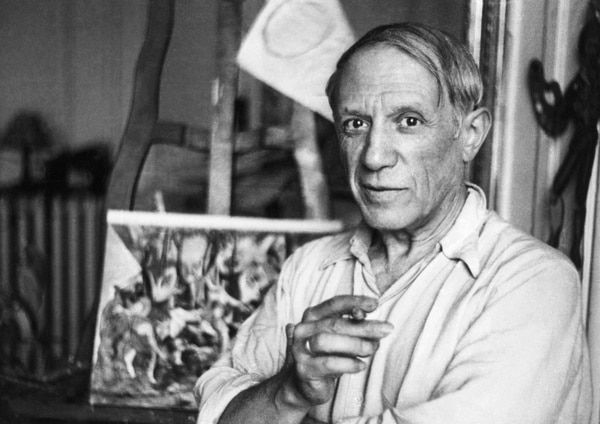
Pablo Picasso was basically a sculptor, a painter, a ceramist, a stage designer, and a printmaker and was considered as one of the greatest artists of the 20th century and he was incredibly popular for paintings, such as ‘Guernica’ and for an art movement that was known as Cubism. Pablo Picasso was considered as one of the most influential and dominant artists of the 20th century. Besides, Picasso was considered as one of the pioneers of Cubism and alongside George Braque, Picasso was believed to have invented the art of collage and he made many contributions to symbolism and to surrealism. Indeed, Pablo Picasso recognized himself as a painter before being anything else. And in addition to being an artist, Pablo Picasso explored different fields, like ceramics and printmaking.
So who was Pablo Picasso?
Pablo Picasso was born in Spain, in particular in Málaga; on October 25th of the year 1881. Picasso’s father was Don José Ruiz, a teacher and a painter and his mother were Doña Maria Picasso. Picasso’s full name was Pablo Diego José Francisco de Paula Juan Nepomuceno María de Los Remedios Cipriano de la Santísima Trinidad Martyr Patricio Clito Ruíz y Picasso; a gargantuan full name, that honors a wide variety of saints and relatives. And Pablo Picasso was credited, together with Georges Braque, with the creation of the movement of Cubism. Picasso was also known for being he was a popular charismatic personality and he was known for his numerous relationships with women in general and not only filtered into his work of art, but it also may have led his behavior when it came to embody the bohemian artist in the world of imagination.
When he was a child, Picasso’s mother used to tell him that he would become a soldier, a general; or a pope; but the little boy Picasso would tell her that he would become a painter instead. And although Picasso was a poor student; he also displayed a very special and even prodigious type of talent for the art of painting and drawing at a very young age.
Pablo Picasso, Childhood
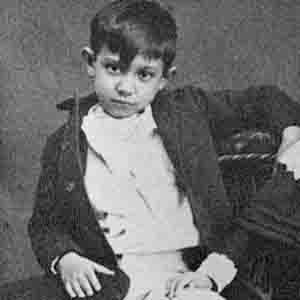
Pablo Ruiz Picasso was born into a special creative family. Indeed; Pablo’s Picasso’s father was mainly a painter and was the first and most important teacher to Pablo Picasso. Picasso started studying formally at the age of 11 years and there were several paintings that existed from his teenage years, like the First Communion during the year of (1895). Picasso’s father noticed his son’s prodigy and he tried to offer his child the best studies and academic educations he could. For instance, it is Picasso’s father who bred his son for a great artistic career in academic art in general. And Picasso was later able to have his first exhibit at the age of 13. But Pablo Picasso quit the school later so that he could enjoy an experiment with all types and modern styles of art. It was later that Picasso went to Paris in 1900 for the first time and it was in 1901 that Picasso was given permission to a very special and luxurious art gallery.
And the precocious 19-year-old Spaniard, Picasso was relatively unknown outside Barcelona, however, despite his young age, Picasso was able to produce a large variety of paintings. And winning amazingly favorable reviews, Pablo Picasso stayed in Paris for the remaining period of the year and he later came back to the city in order to settle once and for all.
Pablo Picasso Career
With more than 20,000 drawings, paintings, ceramics, and sculptures as well as a large variety of ceramics and other items, like theatre sets and costumes, Pablo Picasso was able to build an amazing career and his works remained forever and after. Pablo Picasso has indeed been universally known as one of the most celebrated and most influential artists of the twentieth century. So how did Pablo Picasso Build his career?
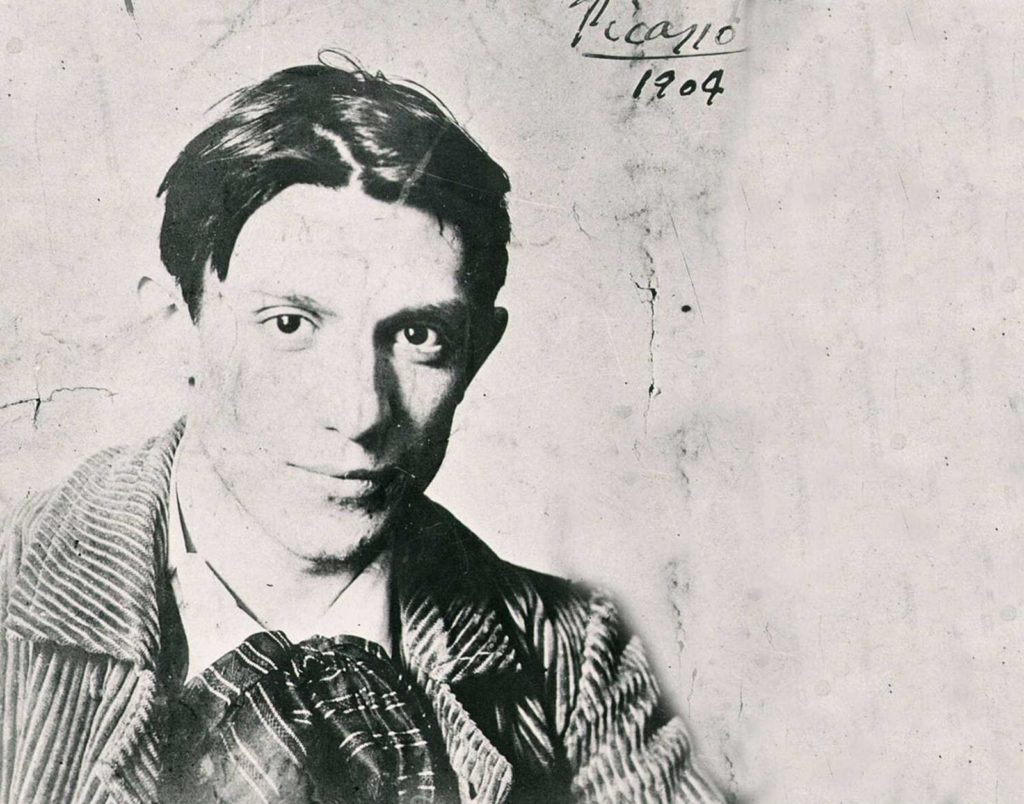
During his early artistic career, Pablo Picasso went through a wide variety of states. And one of during his artistic career, Pablo Picasso went through a wide variety of states and changes. For instance, one of the first stages of Pablo Picasso’s career was more known as the ‘Blue Period’. And the Blue Period designated the late teens of Pablo Picasso when his artistic works and his paintings were rather dominated by different levels and shades of dark blue color and by gloomy colors. And this period was marked by the popular self- portrait in which Pablo Picasso appeared older than his twenty years.
During the years 1904 to 1906, Pablo Picasso entered a special phase that was known as ‘The Rose Period’ in which they lost the dark glumness of his previous period known as the ‘Blue Period’, and Picasso started painting harlequins, circus clowns and also people working in the circus.
And the most optimistic and cheerful period of Pablo Picasso’s career helped attract an increasing number of people and patrons who were fascinated by his artistic works and paintings, especially, the American art collectors, the art dealer, Daniel-Henry Kahnweiler, Gertrude Stein and Leo were influential and played an important role in helping to put the artistic works of Pablo Picasso on a secure and steady financial footing.
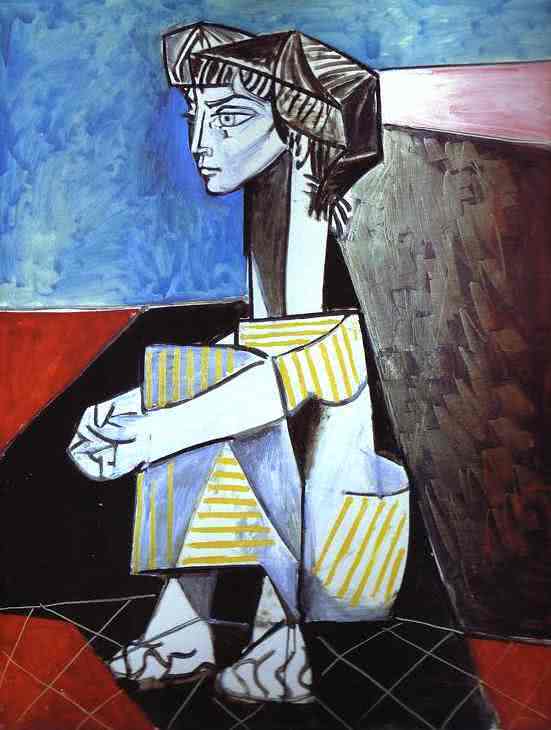
Later, Picasso continued in the year 1907 his artistic experiments and he took inspiration from the aspects of the African art and hence continued his artistic work on this basis. And this led to what was known as the early form of Cubism and this period was also known as one of the most controversial paintings in the artistic career of Pablo Picasso and of his paintings. Indeed, the picture ‘Les Demoiselles d’Avignon that depicted five prostitutes in a brothel triggered so much controversy. Indeed, this exact period of Pablo Picasso’s career was a very special and creative exploration of modernism in art in general; but it also displayed in Picasso’s studio the reaction. However, the reaction from different art critics was negative as far as this period was concerned.
And during the years that preceded the First World War, Picasso, together with other artists, like George Braque; kept developing a new form and style of painting that was known more as ‘Cubism’. For instance, Cubism involved focusing and capturing the inner essence of the subject in general on Canvas with the exaggeration of certain specific features. And the colors that marked this exact phase were invariably dull to some extent, including the color brown, grey, and other neutral colors.
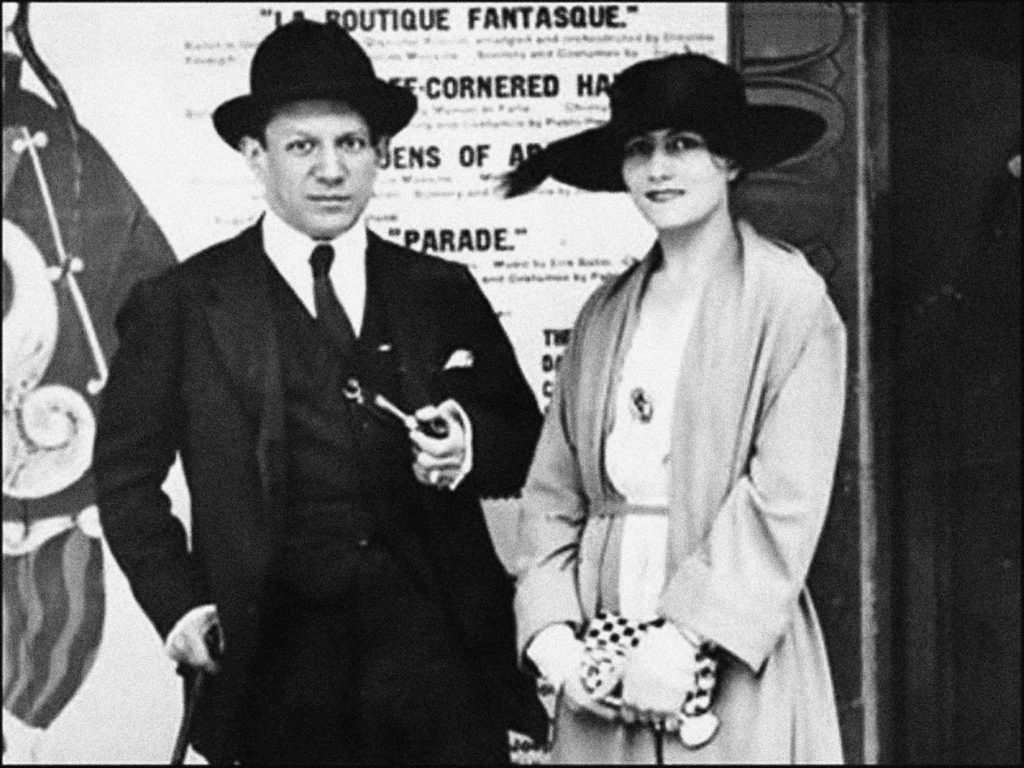
And in the year 1914, Picasso was living with fellow artists in Avignon and his French friends, who were artists, were called up to the army; yet Picasso was rather able to continue painting during the World War. Yet, Kahnweiler was unfortunately exiled from France and the Artist Picasso was left without any dealer. And in 1918, Picasso started his marriage life when he married ballerina Olga Khokhlova. And shortly after that, he started a very successful and fruitful relationship with the French art dealer known as Paul Rosenberg. Indeed, Rosenberg became very good friends with Pablo Picasso and he helped him and his wife settle in Paris, which offered Pablo Picasso a new artistic circle.
At that time, Paris was rather known and considered as an artistic hotspot of what was known as the ‘Roaring Twenties,’ which attracted and interested many creative artists. Picasso stayed married until the year 1955, yet he had many mistresses and affairs. And during the 1920s and 30s, Picasso focused rather on more classical types of artistic works and paintings. And to some extent, Picasso was rather influenced by other artists, like Ingres and Renoir, but at the same time, he managed to retain an individual and unique expression that reflected his style and his own expression.
Picasso had always had natural and instinctive compassion and affection for people who were exposed to oppression and suffering; especially if that was the result of social injustices. And Picasso’s natural desire for justice and equality led him to join the part that defended social injustices; therefore, he joined the French Communist Party. And when the Spanish Civil War took place, Pablo Picasso chose to support the Republicans and he nursed and intense sense of dislike of Franco and all that he did to Spain.
What is Guernica?
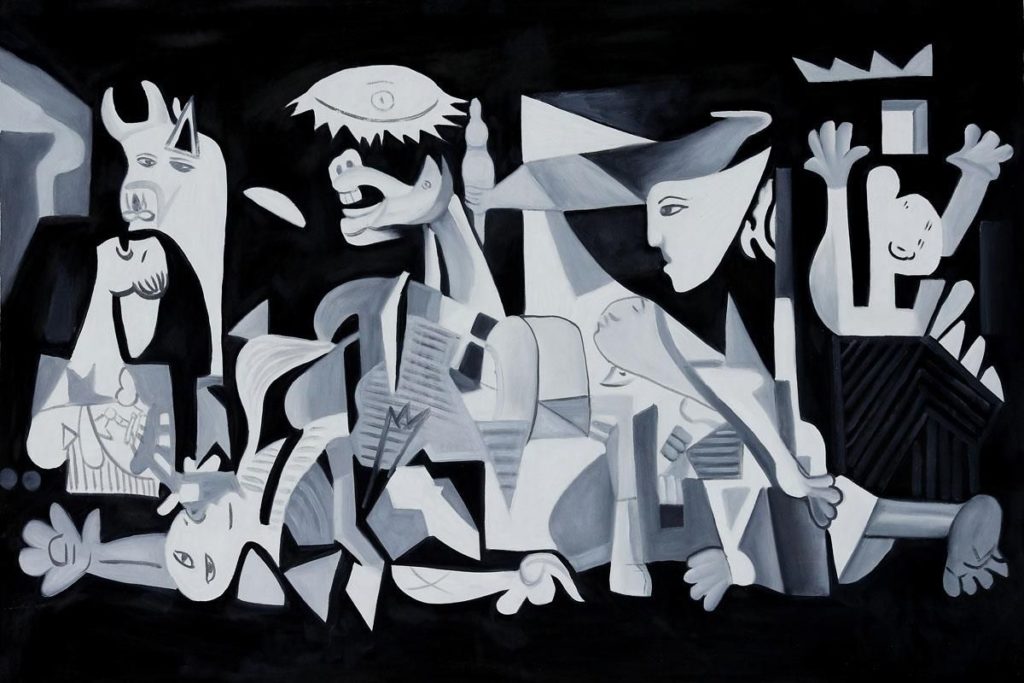
Guernica was one of Picasso’s most well-known paintings, which was indeed a mural of the bombing that took place in Guernica in 1937. And this bombing was rather carried by the German and Italian planes that were involved in bombing civil areas.
The act of bombing Guernica was an important development in universal warfare and it showed how horrible warfare can be and how it could affect the civilians. This bombing became international news through an English journalist called George Steer. And Picasso’s painting came to help immortalize this horrible tragedy that marked a major key event that took place in the twentieth century and an event that changed the world as a whole. But Picasso was really enraged with Franco and he never let his painting to his country Spain during the life of Franco and his artistic work went to Spain only in 1981.
During his entire life, Picasso was really fully aware of the political dimension art had. He was such a passionate artist and painter who tried to convey his feelings and his refusal to injustices in his paintings and artistic works and he had always believed that the art of painting was not basically done in order to decorate apartments, but rather as an instrument of war to people who understood it very well.
The Dove of Peace, a popular painting by Picasso
There is another key painting that Picasso tried to convey in his work of art and it was reflected in his Painting that was known as the Dove of Peace. And the key painting of Picasso was to paint a simple bird to symbolize peace. Picasso donated the dove painting to the Soviet-backed World Peace Congress in 1949. And the Dove of Peace designated a new, creative phase in Picasso’s art and to convey the power of simplicity through his painting. And Pablo Picasso remained a faithful member of the French Communist part until the day he died.
And the life of Pablo Picasso was also marked by the existence of many other artists and Spanish poets who depicted his era and who gave a blooming picture of Spain and made it an inspiring country and an important artistic Pole that attracted people from all over the world. And among the Spanish artists and poets at that time; we can mention Federico Garcia Lorca, a poet from the Spanish city Granada. Federico García Lorca was considered as one of Spain‘s greatest dramatists and poets and he wrote some of the most successful poetry collections.
Pablo Picasso’s daughters
Throughout his entire life, Pablo Picasso maintained numerous mistresses in addition to his primary wife. And Pablo Picasso was married twice and he had exactly three women and had four children of them. Picasso’s children are as follows, Paulo from Olga Khokhlova, Claude and Paloma with Francoise Gilot and Maya with Marie-Thérèse Walter. Paulo was Picasso’s one and only legitimate son and he passed away in the year 1975. And his children Bernard Picasso and Marina, in addition to Maya and Paloma are now considered as the official heirs to his estate.
A Spanish Museum named after Pablo Picasso
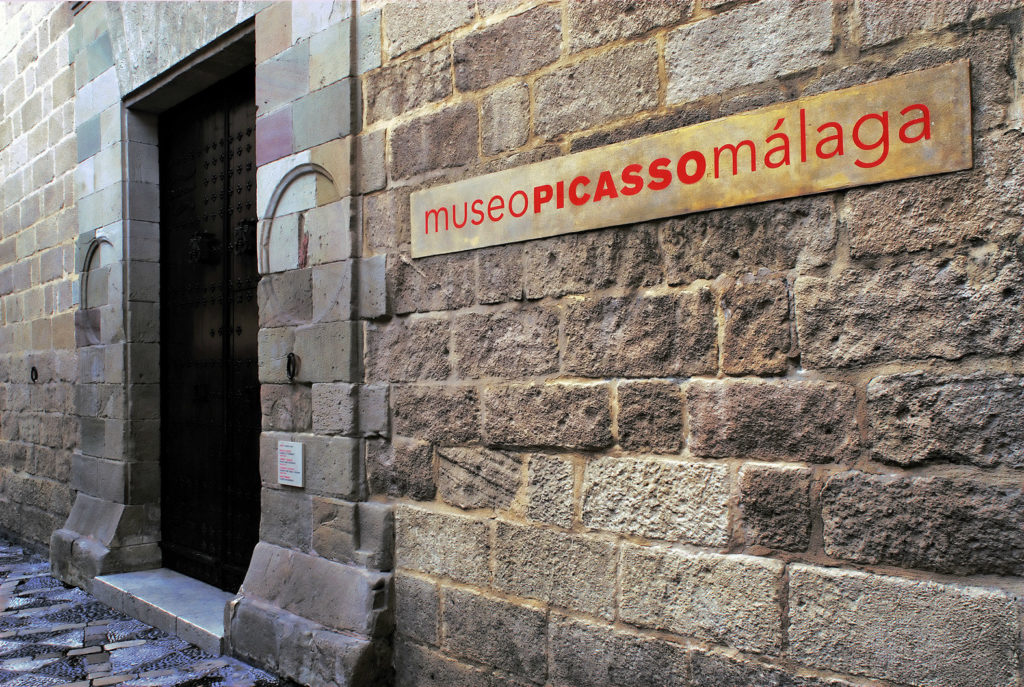
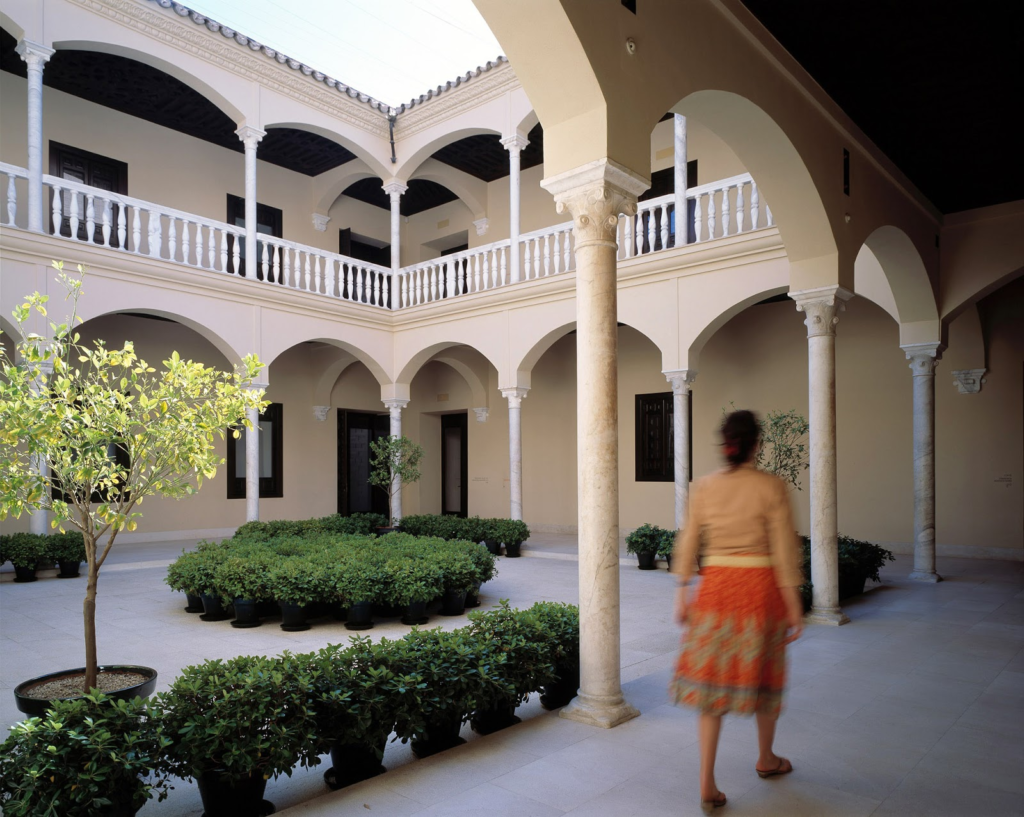
The city of Malaga was the city that witnessed the birth of Pablo Picasso in 1881; the most influential person in Malaga. And Malaga witnessed Picasso’s first years of life. Malaga experienced a huge development and transformation, especially since the opening of a Malaga’s museum after the Spanish painter Pablo Picasso. For instance, this museum marked the starting point of an artistic and cultural evolution of the entire city and all the streets around this museum were renewed.
And in 1988, the Malaga’s city hall attempted and created the Picasso Foundation with the objective of promoting and spreading the work of this brilliant artist. The foundation located the place in the house where Picasso was born. And the museum was then declared as the site of Cultural Interest of the city. And in addition to naming a Museum after Picasso’s name, there were some movies Picasso inspired, like the popular movie of Antonio Banderas. The film was screened during the Tribeca Film Festival on April the 20th and it was followed by a conversation with Antonio Banderas and the cast.
Pablo Picasso Death
Mougins, in France on April the 8th witnessed the death of the great Spanish artist Pablo Picasso who was known more like
the art titan of the 20ths century. Picasso died in the morning at the hilltop of his villa in Notre Dame de Vie and he was 91-years-old when he passed away.
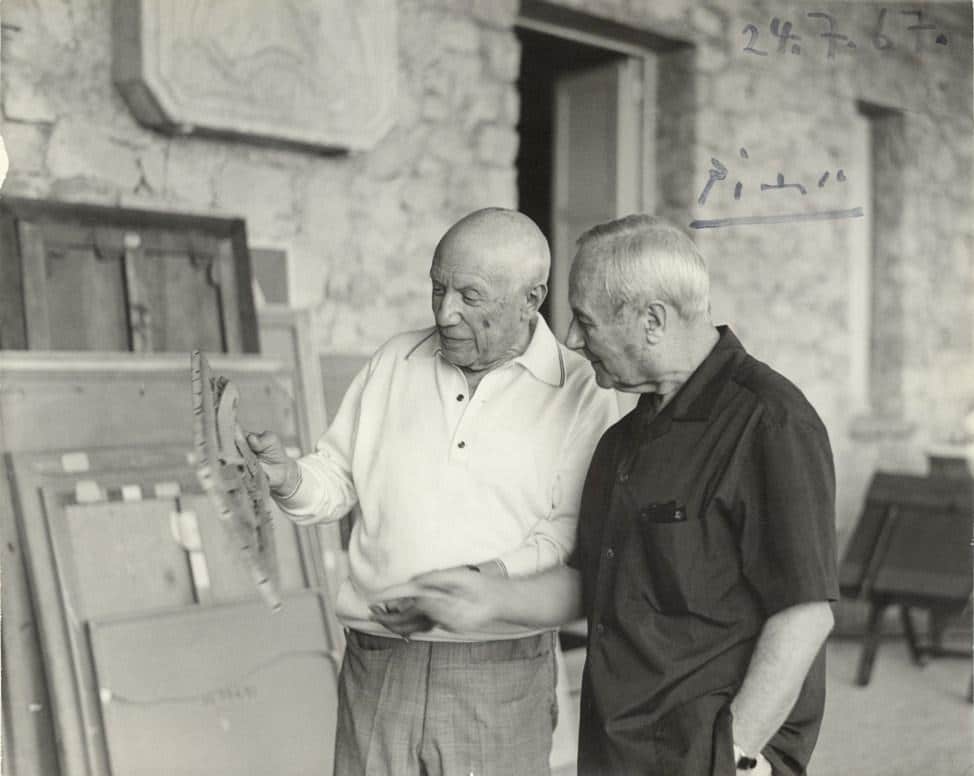
And the death of the Spanish artist was more attributed to pulmonary edema and because of the fluid in his lungs, and a local physician was summoned to his mansion and announced the cause of death and the fact that he had been ill for several weeks. Pablo Picasso was in exile from his motherland since the year 1939 and that was when Francisco Franco defeated the Republican government of Spain during the civil war that lasted for about three years. And with the death of Pablo Picasso, an entire history of success came to an end, but the artistic soul of this art titan remained forever in the world of arts.