
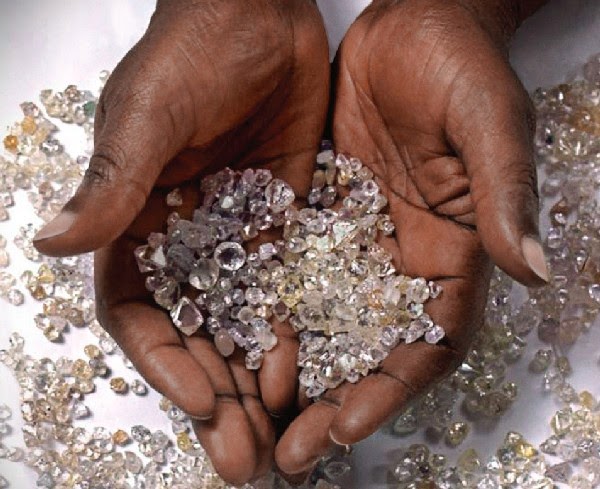
A voyage into the production of Diamonds
The beginning of lovers’ journey into forever should be with an emblem pure and beautiful- a gem that truly lasts forever- Diamonds. No wonder a diamond is the perfect engagement ring. Diamonds and love possess similar traits. Both are powerful, strong, long-lasting, mystical, and spiritual.
History of diamonds
Diamonds are believed to be first discovered in India, in 2500 BC along the rivers of Penner, Krishna, and the Godavari. The precious stones were loved for their strength and ability to refract light. According to the CapeTown diamond museum, early tales referred to diamonds as indestructible. These rigid stones were tools to engrave metal.
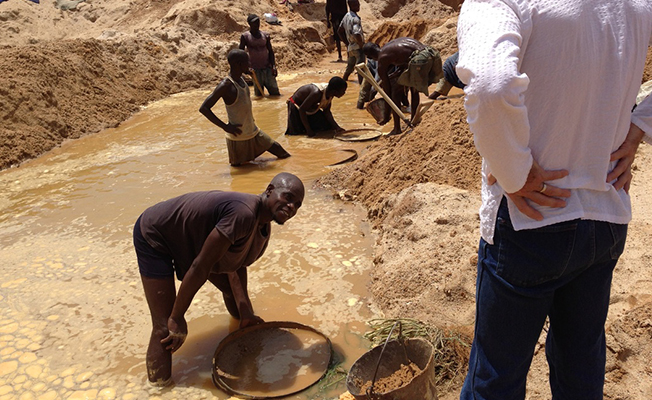
The rigidity and beauty of diamonds made them stones of high value. Their popularity grew, and traders sold the shiny gems throughout Europe, Asia, and the known world.
A gem for royals
Diamonds began to appear among the European regal class in 322BC. By the 13th century, Louis IX of France established a law reserving diamonds for the king. Such was the premium placed on this rare stone that it became a symbol of wealth among elite aristocrats in Europe. For a long time, India was the only known source of diamonds.
In the 18th century, the mines in India began to deplete, and a quest for alternative sources of diamonds started.
In 1725, a small deposit of diamond was found in Brazil. A chance discovery of a 21.25-carat diamond by a 15-year-old teen, Erasmus Jacobs, in his father’s farm on the south bank of the Orange River, in South Africa, during the Colonial era signified the boom of the diamond industry in the world. Diamond in South Africa attracted traders from afar. And the first large scale mining operation, Kimberley Mine was opened. Diamonds ceased to be rare and easily accessible, to all at the right price.
Diamond Rush
During the Diamond Rush in South Africa, Cecil Rhodes, the Prime Minister of the Cape Colony from 1890 to 1896, accumulated many mining properties and created De Beers Consolidated Mines Limited. For most of the twentieth century, De Beers set diamond prices and entirely controlled the diamond market. The company enjoyed autonomy until Russia, Australia, and Canada began mining diamonds.
De Beers, to date, remains the world’s largest rough diamond producer by value. The company, over the years, has retained its status as the producer of the majority of South Africa’s total diamond production. Today the diamond industry is dominated by Alrosa, a Russian mining company, and De Beers.
Top Diamond producing countries
Diamonds are mined in about 25 countries in the world. Some of which are Russia, Botswana, Canada, South Africa, Angola, Namibia, Lesotho, Zimbabwe, Sierra Leone, Democratic Republic of Congo, Tanzania, Brazil, Liberia, Guinea, Guyana, India, Republic of the Congo, Ghana, Central African Republic (CAR), Cameroon, Cote d’Ivoire, and China.
The top 10 diamond producing countries according to 2018 reports released by Kimberley Process Certification Scheme are Russia, Botswana, Canada, South Africa, Angola, Namibia, Lesotho, Zimbabwe, Sierra Leone, and the Democratic Republic of Congo.
Russia presently is believed to be the world’s largest producer and exporter of rough diamonds by volume. Kimberley Process Certification Scheme report valued the total diamonds mined in 2018 as $3,983 million. The Alrosa, a partly state-owned Russian company mine majority of the country’s diamonds.
Canada discovered diamonds as late as 1991, at Point Lake near Lac de Gras in the Northwest Territories. Since mining began in the country in 1998, Canada has grown to become one of the largest producers of diamonds in the world. There are four active diamond mines in the country. And the country is 2018’s third-largest producer of diamonds with a total estimate of $2098 million diamonds, according to reports.
Canadian diamond mines’ achieved great success in their first two decades. The country’s success can be attributed to the nations’ high-quality diamonds, Canadian citizens’ patronage. More importantly, consumers value diamonds produced from mines that are environmentally responsible and conflict-free.
Africa’s conflict diamonds.
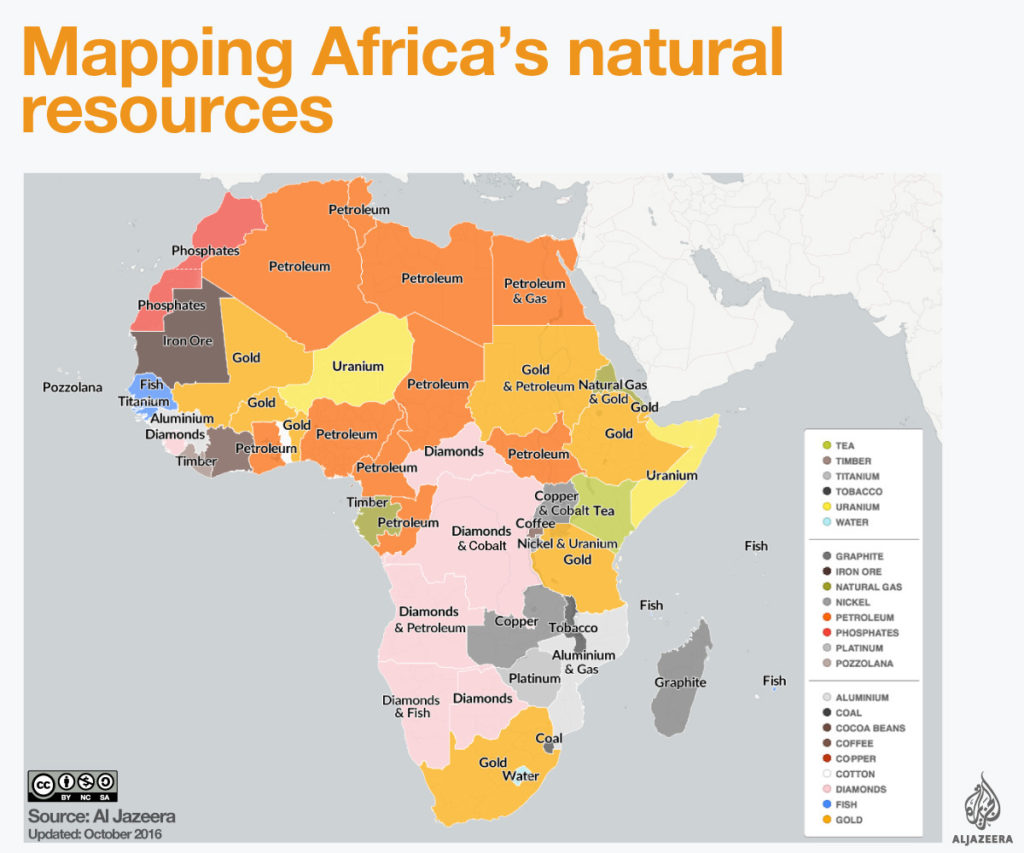
Africa produced half of the diamonds in the world. Unlike European countries, diamonds mined in Africa over the years have been rife with tales of child labor, corruption, and conflict. Nature’s gift to the continent became funds for brutal wars in countries such as Angola, Central African Republic, the Democratic Republic of Congo, Liberia, and Sierra Leone.
In a bid to sanitize the diamond industry, the Kimberley Process (KP), was birthed in 2003. KP’s goal is to unite governments, civil society, and the broader industry to stem global production of conflict diamonds through a certification scheme. Countries implement safeguard measures on shipments of rough diamonds and certify them as “conflict-free.” Member Countries must only trade with other participating states that meet the agreement’s requirements on conflict-free diamonds.
From colonial exploitation to modern exploitation
However, Africa’s diamond trade problems persist. Financial Times investigative journalist Tom Burgis in his book, The Looting Machine finds a common trend over his travels through African countries-the wholesale expropriation of resources during colonial times has barely slowed through the post-independence era.
“The multinational companies hold enormous economic and political power in post-independence African countries,” the author says. “In this way, there is a pretty straight line from colonial exploitation to modern exploitation.” This sad trend reoccurs in all spheres of African natural resources. Host communities are left with stipends while multinationals cash out on Africa’s natural resources. The indigenes then fight for scraps and battle environmental degradations and health risks.

A high level of corruption, especially among government officials, especially Dictators, is responsible mainly for Africas’ inability to make wealth from its natural resources. Illicit deals were made and money siphoned to offshore banks.
To survive, the economic and security challenges, citizens migrate in search of greener pastures.
Will Africa ever be able to truly control its resources and develop outside of Europe’s influence? The answer lies in the hands of African leaders.
