
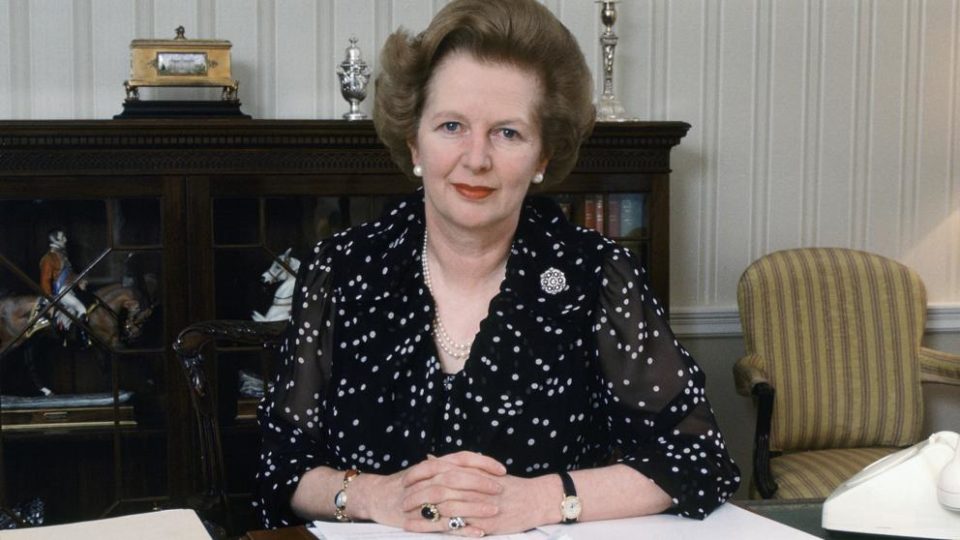
“If you want something said, ask a man; if you want something done, ask a woman”. this sentence described how precise and powerful was the Prime Minister of UK at this time. Margaret Thatcher is the woman of the month, for our October Edition.
Celebrating Margaret Thatcher, Britain’s first female prime minister.
Once in every generation, a trailblazer emerges to pave a new path for others to follow. Baroness Margaret Thatcher, also known as the Iron Lady, is one of such. She is a leader whose policies and ideologies are adopted by other world leaders and international organizations to date. This month, we celebrate the UK’s first female Prime Minister.
Who is Margaret Thatcher?
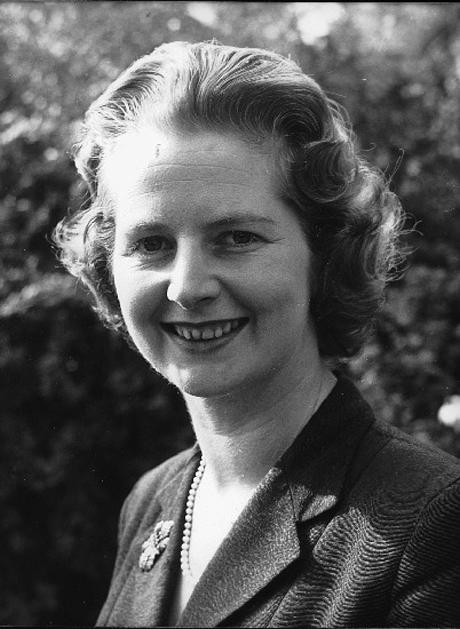
Baroness Margaret Thatcher was Britain’s first Prime Minister. She held the office from 1979 to 1990 winning three consecutive elections in two decades. She was the leader of the country’s Conservative Party and unarguably one of the most influential prime ministers of Britain.
During her tenure, she introduced and implemented radical economic policies and ideologies that earned both praises and criticisms. Her pro-privatization policies and public spending cuts transformed the British economy from Statism to Liberalism.
Childhood
Born on October 13, 1925, Margaret Thatcher lived her early childhood in Grantham, Lincolnshire, England with her family. She was born into the family of Alfred Roberts and Beatrice Ethel. It is believed that she developed a passion for politics from her father, Alfred Roberts who was active in local politics in the Methodist church. He rose to be the mayor of Grantham in 1945.
As a student, Thatcher was a bright kid. She schooled in Kesteven and Grantham Girls’ where she became the head girl. Thatcher was also the President of the Oxford University Conservative Association in college. In 1947, Thatcher moved to Essex after she obtained a bachelor of science in Chemistry from Oxford and later studied Tax Law.
Rise in Politics
Thatcher’s first significant debut into politics was not overly successful. She ran for Parliament in 1950 but lost. A year later, she married a wealthy industrialist, Denis Thatcher. The couple had twins in 1953.
Six years after the birth of their twins, Thatcher veered into politics again and won the Conservative seat of Finchley in 1959. Thus began her steady rise in popularity and politics.
In 1974, Thatcher was the only minister brave enough to challenge Edward Heath for the party’s leadership. With the backing of the conservative right wing, Thatcher won the party’s selection in 1975 and became the first woman to serve as the opposition leader in the House of Commons.
In 1979, she became Britain’s first female prime minister after she led the conservative party to a decisive win.
Thatchers Legacy
Thatcher is mostly remembered for her pro-privatization policies. She was a strong advocate of greater independence of the individual from the state. Her policies were radical at the time and received massive criticisms from the public. But Thatcher was a fierce and dogmatic leader who never backed down nor bowed to objections. She was uncompromising and focused on achieving her goals.
One of her significant economic legacies was her focus on labor deregulation and flexibility of world markets.
Her supporters credit her for turning the UK economy around, while her critics accuse her of not paying attention to issues of social justice, equity, and inclusiveness.
Whatever perspective you view this from, one thing is clear, When the economy needed a turnaround and Thatcher stood up and did the needful.
Family life.
A woman having a family and running a country is no mean feat. Margaret Thatcher proved to the world that it is possible. She married a wealthy businessman who was aware of her ambitions and supported her.
She cared for her home the best way she could and her daughter Carol, in her book A Swim-On Part in the Goldfish Bowl, referred to her as “a caring and loving mother.”
But having a mother whose shoe is too big to fill must be a daunting task. In a BBC documentary, Carol revealed that: “All my childhood memories of my mother were just someone who was superwoman before the phrase had been invented. She was always flat out, she never relaxed, household chores were done at breakneck speed in order to get back to the parliamentary correspondence or get on with making up a speech.
“You couldn’t distract her… she had tunnel vision in terms of whatever she was doing.”
Thatcher’s political position might have robbed her of family time, but it never stopped her from loving her family.
When her mark, her other Twin got missing in the Sahara in 18.
1982, his mother was beside herself.
After the death of her husband in 2003, Baroness Thatcher was devasted. Her public appearance greatly reduced, and her health worsened.
She later passed away on April 8, 2013, after suffering a stroke.
